



Research & Publications
Welcome to Dr Amir Sadri’s Research and Publications page, featuring peer-reveiwed work in rhinoplasty, facial aesthetics, cleft surgery and plastic & reconstructive surgery.
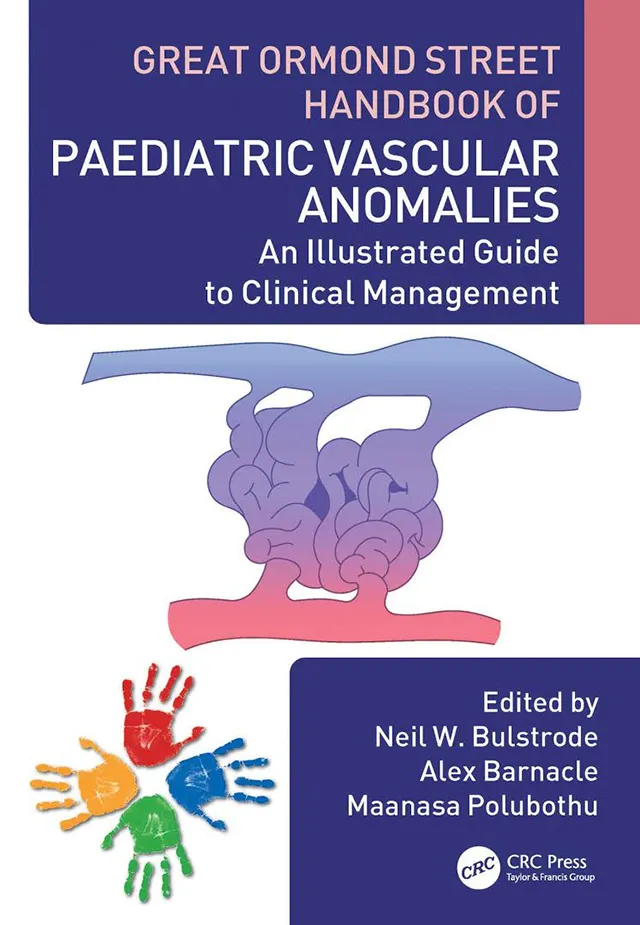
Featured Textbook
Great Ormond Street Handbook of Paediatric Vascular Anomalies: An Illustrated Guide to Clinical Management
Chapter 11: Arteriovenous Malformations
Authors: Premal A. Patel, Amir Sadri, Maanasa Polubothu, and Neil Bulstrode
Published by CRC Press (2023), this definitive handbook is the primary clinical resource for the multidisciplinary management of rare paediatric vascular conditions.
Rhinoplasty & Facial Aesthetics
Rhinoplasty
June 2020 – Dorsal Preservation Rhinoplasty: Core Beam Computed Tomography Analysis of the Nasal Vault, Septum, and Skull Base—Its Role in Surgical Planning
The Research: This study uses CT/CBCT imaging to map the nasal vault, septum and skull-base anatomy relevant to dorsal preservation rhinoplasty. The findings support more precise surgical planning and help surgeons work safely around critical structures.
February 2020 – How to Reduce the Probability of a Pollybeak Deformity in Primary Rhinoplasty: A Single-Center Experience
The Research: This paper evaluates technique and soft-tissue management strategies designed to reduce the risk of “pollybeak” deformity after primary rhinoplasty. It outlines practical steps to achieve a cleaner supratip contour and minimise unwanted scar tissue build-up, particularly in higher-risk cases.
Otoplasty / Ear Aesthetics
September 2018 – A Scaphomastoid Sutures Technique for Prominent Ear Otoplasty
The Research: Describes a suture-based otoplasty technique (scaphomastoid sutures) aimed at correcting prominent ears while minimising cartilage trauma and improving contour control.
June 2015 – The prominent antihelix and helix: the myth of the “overcorrected” ear in otoplasty
The Research: Challenges the assumption that a prominent antihelical fold automatically indicates an “overcorrected” otoplasty result, helping refine how aesthetic outcomes are judged.
June 2015 – The discrete scar in prominent ear correction: a digital 3-dimensional analysis to determine the ideal incision for otoplasty
The Research: This research uses digital 3D analysis to identify incision placement that can reduce visible scarring in otoplasty (prominent ear correction). The goal is to improve scar concealment while maintaining strong aesthetic outcomes.
Facial Vascular / Lesions (case report)
August 2014 – Superficial temporal artery aneurysm: beware of the lump with a thump
The Research:A facial vascular case report highlighting diagnosis and management of a superficial temporal artery aneurysm presenting as a pulsatile temple lump, emphasising recognition and safe treatment planning.
Cleft Lip & Paediatric Surgery
Cleft Lip & Palate (clinical research)
July 2020 – Comparison on the Fisher Anatomical Subunit and Modified Milard Rotation – Advancement Cleft Lip Repairs
The Research: Compares outcomes between two widely used unilateral cleft lip repair approaches (Fisher anatomical subunit vs modified Millard rotation-advancement), focusing on postoperative appearance and symmetry.
Septermber 2018 – Safe surgical draping in cleft surgery
The Research: Describes a safer draping method for cleft surgery (shared-airway procedures), designed to maintain sterility while giving the anaesthetist clear visibility and access to the endotracheal tube and monitoring throughout surgery.
Speech Outcomes
December 2025 – Cleft palate surgery and speech outcomes in children with Robin sequence
The Research: A review of cleft palate surgical treatment in children with Robin sequence, summarising approaches and what the evidence shows about speech outcomes following repair.
Cranifacial Development
December 2015 – Effectiveness of Conservative Therapy and Helmet Therapy for Positional Cranial Deformation
The Research: Discusses outcomes of conservative management versus helmet therapy for positional head shape deformity, summarising effectiveness and treatment considerations.
Training & Simulation (Cleft surgery)
May 2021 – Training to be a cleft surgeon in the UK
The Publication: Outlines the UK cleft training pathway and practical guidance for trainees aiming to specialise in cleft lip and palate surgery within a centralised multidisciplinary system.
2017 – Coffee Cups to learn palate surgery: a simple and cheap simulator for technical skills acquisition
The Publication: Presents a low-cost, accessible simulation model for practising cleft palate surgical skills, supporting structured technical skill development outside the operating theatre.
General plastic & reconstructive surgery
Breast Recnstruction & Breast Oncology
December 2025 – Post-operative Complications Do Not Influence Time to Adjuvant Treatment in Breast Cancer Patients Undergoing Implant-based Reconstructions: Pre-Pectoral Versus Sub-Pectoral
The Research: Compares pre-pectoral vs sub-pectoral implant based reconstruction and whether post operative complications influence time to adjvant treatment.
October 2025 – Impact of incision type in breast cancer-conserving mastectomy: a comparative analysis of outcome
The Research: Compares outcomes accorss incision choices used in breast cancer-conserving mastectomy to inform planning and results.
February 2025 – Evaluating Tumor size Ki67 Proliferation Index Ratio for Optimizing Surgical Axillary Treatment Decisions in Breast Cancer Patients
The Research: Evaluates a tumor size–to–Ki67 ratio as a potential aid for decision-making around surgical axillary treatment.
January 2024 – Cavity Shave Margins in Breast Conservation Surgery: a Strategy to Reduce Positive Margins and Surgical Time
The Research: Examines cavity shave margins as a strategy to reduce positive margins and operative time in breast-conserving surgery.
January 2022 – Role of Breast-Conserving Surgery on the National Health System Economy from and to SARS-COVID-19 Era.
The Research: Reviews breast-conserving surgery from a health system/econimoc perspective accross the COVID-19 era.
View on PubMed | Free full text (PMC)
November 2021 – Pre-pectoral Breast Reconstruction Does Not Affect Early Immunological Response: A BIAL 2.20 Study Subanalysis
The Research: Compares early immunological response after pre-pectoral vs sub-pectoral reconstruction (study subanalysis).
March 2021 – Early Breast Cancer Recurrence Mimicking BIA-ALCL in a Patient With Multiple Breast Procedures
The Research: Case report describing a recurrence that clinically mimicked BIA-ALCL in a patient with multiple prior breast procedures.
Microsurgery, Limb Reconstruction & Complex Wounds
November 2020 – Recycling of flap pedicle in complex lower extremity reconstruction: A proof of free muscle flap neovascularization
The Research: Case report showing a “recycled” pedicle from a previous free muscle flap being used to supply a new free flap in complex lower-limb reconstruction, supporting long-term neovascularisation and feasibility in selected salvage cases.
March 2019 — The use of mobile computing devices in microsurgery
The Research: Review of how smartphones/tablets can support microsurgical training and clinical practice (e.g., simulation, imaging, assessment, workflow), highlighting practical applications and future potential.
View on PubMed | Free full text (PMC)
July 2018 – Targeted muscle reinnervation for pain control in an elective transradial amputation
The Research: Discuesses TMR for neuroma/nerve pain control as part of elective transradial amputation care.
February 2018 – Targeted muscle reinnervation for pain control in an elective transradial amputation (related report)
The Research: Related publication on TMR for pain control in elective transradial amputation.
May 2017 – Postsurgical pyoderma gangrenosum versus necrotizing fasciitis: Can we spot the difference?
The Research: Highlights differentiating features between these conditions to help avoid delayed diagnosis or inappropriate debridement when a post-op wound deteriorates.
Lymphoedema
March 2016 – A comprehensive review of the natural lymphaticovenous communications and their role in lymphedema surgery
The Research: Review summarising evidence on lymphatic-venous connections and how they may influence surgical approaches in lymphedema management, including a proposed way to classify these communications.
September 2015 – Online resources for lymphoedema
The Research: Practical overview of reputable online resources to support patient education and clinician reference.
Burns & Soft Tissue Injury
March 2015 – Stryker intracompartmental pressure monitor in the triage of circumferential limb burns
The Research: Discusses compartment pressure monitoring as a practical aid when assessing circumferential limb burns, supporting safer decision-making around escalation/intervention.
June 2014 – Cost savings in plastic surgery: boardless skin meshers?
The Research: Short communication exploring cost implications of boardless skin meshers in burns/plastics practice.
Reconstructive Oncology / Breast Implant Practice (Technical Notes)
May 2014 – Salvage of ulcerating metastatic inguinal lymphadenopathy using the inferior pedicled TRAM flap
The Research: Reconstructive oncology case report describing use of an inferior pedicled TRAM flap to achieve coverage/salvage in a challenging groin/inguinal wound context.
February 2014 – Handover in plastic surgical practice: the ABCD principle
The Research: Describes a structured approach to clinical handover within plastic surgery to improve consistency and reduce communication-related risk.
Safety, Communication & Training
February 2014 – Breast implant information identification: Betadine smear
The Research: Practical tip describing a simple method to improve visibility of implant manufacturer markings for identification purposes.
April 2013 – Video recording of surgery to improve training in plastic surgery
The Research: Discusses how recording operations can support feedback, reflection, and skills development in surgical training (with practical considerations).
December 2012 – iPad local flap pre-operative planning: A good training tool
The Research: Letter describing tablet-based planning as a simple educational aid for improving local flap design and pre-op thinking.
October 2011 – Microsurgical trainer
The Research: Describes a low-cost microsurgery training set-up to support skills practice outside of the operating theatre.
October 2011 – The use of a template to accurately position the inframammary fold in breast reconstruction
The Research: Introduces a simple templating method to help mark/position the inframammary fold more consistently in breast reconstruction.
Earlier Surgical Research (Pre-Specialisation)
• Degloving injuries (2013)
• Ruptured Achilles tendon overview (2013)
• Ruptured ACL overview (2011)
• Tourniquet knowledge survey (2010)
• One-handed laparoscopic knot: “Nott technique” (2009)
• Bilateral posterior shoulder fracture-dislocations case report (2009)
• Tissue factor in symptomatic carotid plaque (2009)
• Suppurative arthritis involving an os acromiale (2011)