


Alar base reduction
Alar base reduction (sometimes called nostril reduction or nostril narrowing) is a procedure that refines the width of the nostrils and the nasal base. People usually consider it when the nostrils look wide, flare when smiling, or appear uneven from the front. It can be performed on it own or alongside a rhinoplasty, depending on your anatomy and goals.
At a glance
- Also known as: Nostril reduction / nostril narrowing
- Best for: Wide nostril base, nostril flare, mild asymmetry
- Downtime: Often ~7–14 days socially (varies)
- Scars: Usually placed in natural creases
Who might consider alar base reduction?

You may be a good candidate if you notice:
- A wide nostril base or prominent nostrils
- Nostril flare, especially when smiling
- Asymmetry between nostrils
- You want refinement without changing the bridge or tip significantly
A consultation is important, because in some people a different approach (or no nose reduction at all) gives a more natural balance.
How is it done?
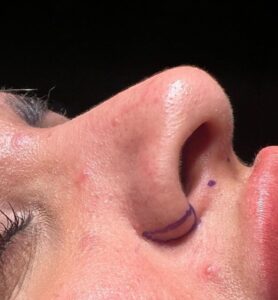
A small amount of tissue is removed in carefully chosen areas, often within natural creases around the nostril and/or the nostril sill, then closed with fine sutures. When combined with rhinoplasty, the decision is usually made after the main reshaping to avoid narrowing the base too much.
Where are the scars?
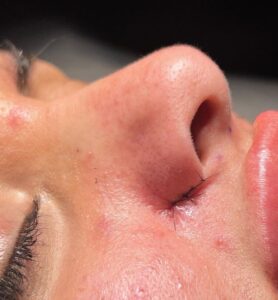
Incisions are typically placed in natural creases to keep scars discreet. Healing varies between individuals, and scar visibility depends on skin type and your healing process. Your surgeon should explain expected scar placement during consultation.
 Recovery and Results
Most people feel comfortable returning to normal daily routines within 1-2 weeks, although swelling can take longer to fully settle. The area continues to refine over the following weeks, while scars gradually mature over a ling period.
Risks and Limitations
Risks can include bleeding, infection, delayed healing, noticeable scarring, asymmetry, a over or under correction. Conservative planning helps reduce risks, but no outcome can be guaranteed.
Related procedures
If you’re interested in exploring options, you may also find it helpful to read about:
- Rhinoplasty (shape refinement)
- Septorhinoplasty (breathing + shape)
- Revision rhinoplasty (secondary surgery)
FAQs
Q1: What is alar base reduction?
Alar base reduction is a procedure that narrows the width of the nostrils and nasal base. It’s often used to reduce nostril flare, improve symmetry, and create a more proportionate front view while keeping the result natural.
Q2: Is alar base reduction the same as rhinoplasty?
Not exactly. Rhinoplasty typically reshapes the bridge and/or tip, while alar base reduction focuses specifically on the nostrils and nasal base. It can be done alone or combined with rhinoplasty depending on your goals.
Q3: Will alar base reduction affect breathing?
When planned carefully, it usually doesn’t. However, if the nostrils are narrowed too much, airflow can be affected. This is why assessment of your anatomy and nasal function is important before surgery.
Q4: Where are the scars from alar base reduction?
Scars are usually placed in natural creases around the nostrils and/or at the nostril sill, designed to be discreet once healed. Scar visibility varies between individuals and depends on skin type and healing.
Q5: How long does recovery take?
Most people feel comfortable returning to normal daily activities within 1–2 weeks, although swelling can take longer to fully settle. Scar maturation and final refinement continue over the following weeks to months.
Q6: Can alar base reduction be done without changing the rest of my nose?
Yes. If your main concern is nostril width, flare, or asymmetry, alar base reduction can be performed as a focused procedure without altering the bridge or tip, but suitability depends on your anatomy.