

What is preservation rhinoplasty
Preservation rhinoplasty is a modern approach to nose surgery that aims to refine the nose while maintaining as much of the natural nasal structure as possible, particularly the bridge (dorsum) and the key supporting tissues. Instead of removing and rebuilding large parts of the nasal framework, preservation techniques focus on conserving cartilage, bone and stabilising ligaments wherever appropriate, with changes made in a more ‘structure-sparing’ way.
It’s most commonly discussed in the context of dorsal preservation – techniques used to address a dorsal hump (a bump on the bridge of the nose) while keeping the natural dorsal lines and the junction between the bony and cartilaginous bridge more intact.
Page Summary
| Section | Summary |
|---|---|
| What it is | What “preservation” means and what it refers to in rhinoplasty. |
| Differences | How preservation approaches compare with traditional (structural) rhinoplasty. |
| Who it’s for | Which noses and goals may suit it best, and when other approaches are needed. |
| Benefits | Why patients ask about it and the potential advantages in suitable candidates. |
| Risks & limits | Key limitations, risks, and why correct patient selection matters. |
| Next steps | How to book a consultation. |
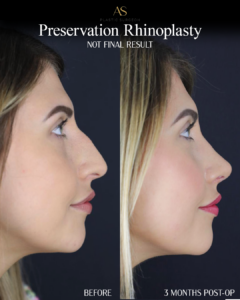
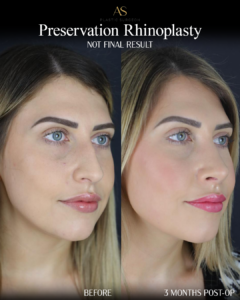
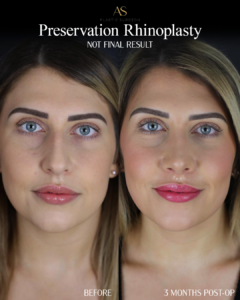
How preservation rhinoplasty differs from traditional rhinoplasty
Both traditional and preservation rhinoplasty can achieve excellent aesthetic and functional outcomes. The difference is usually how the surgeon gets there.
Traditional (structural) rhinoplasty often involves:
- More direct reshaping of the bridge through removal/reconstruction techniques
- Greater use of grafts in certain cases
- A ‘build and support’ approach when anatomy requires stronger structural change
Preservation rhinoplasty often aims for:
- Less disruption to the natural bridge and supporting tissues
- techniques that lower or reshape the dorsum while preserving key anatomy
- A focus on maintaining natural contour and stability where suitable
A helpful way to think about it: Preservation rhinoplasty is not ‘better’ or ‘worse’ – it’s a strategy that can be ideal for the right nose with the right goals.
Who is a good candidate?
Preservation rhinoplasty may be considered when
- You have a dorsal hump and want a natural bridge contour
- Your underlying anatomy allows the dorsum to be reshaped/lowered without needing extensive reconstruction
- Your goals are refinement rather than major structural change
That said, not everyone is an ideal candidate. Some noses require a more structural approach, particularly when there are complex deformities, major asymmetry or previous surgery (revision cases) where stronger reconstruction may be necessary.
The best way to decide is through an in-person assessment where your surgeon evaluates:
- nasal structure and proportions
- airway/breathing function
- skin thickness
- previous injuries or surgery
- what changes are realistically achievable
Potential benefits (and why patients ask about it)
Patients often ask about preservation rhinoplasty because it aims to
- maintain natural dorsal lines
- reduce unnecessary disruption to cartilage and bone
- support to a stable, long-term result in suitable candidates
It’s important to keep expectations grounded. Every rhinoplasty involves healing and swelling, and final refinement can take many months.
Limitations and risks to understand
All rhinoplasty techniques carry risks. General surgical risks include bleeding, infection and anaesthetic risks.
Rhinoplasty specific risks include:
- dissatisfaction with appearance or symmetry
- persistent swelling or irregularities
- breathing changes
- need for revision surgery
With any hump reduction strategy (including preservation approaches), surgeons are careful to avoid problems like middle vault weakness or contour changes that can occur if dorsal structures are over-resected.
This is why surgeon experience and correct patient selection matter – there isn’t a one-size-fits-all method.
Next step: a personalised assessment
If you’re considering rhinoplasty, the right technique depends on your anatomy, goals, and breathing function. A consultation allows your surgeon to recommend the safest approach to achieve a natural result.
This article is general information and not personal medical advice. If you have concerns about your nose or breathing, please seek an in-person assessment