

Cartilage Grafts in Rhinoplasty: When They Are Needed and What To Expect
Cartilage grafts are often used in rhinoplasty when the nose needs extra support, structure or refinement. They can be especially helpful in revision rhinoplasty, noses with weak natural cartilage or cases where both appearance and breathing need to be improved.
Many patients are surprised to learn that rhinoplasty is not always about removing cartilage. In some cases, adding carefully places cartilage is the best way to create a balanced, natural looking result and to support the long-tern shape of the nose.
In this guide, I explain what cartilage grafts are, when they may be needed, where the cartilage comes from and what patients should expect during recovery.
Page Summary
| Section | Summary |
|---|---|
| What it is | What a cartilage graft is in rhinoplasty and why adding support can be just as important as reducing tissue. |
| Why grafts are used | When cartilage grafts may be recommended to improve structure, definition, balance, or breathing. |
| Where cartilage comes from | The main sources of cartilage in rhinoplasty, including septum, ear, and rib. |
| Donor cartilage | When donor cartilage may be considered, why it is used in selected cases, and the need for careful patient selection. |
| Recovery | What recovery may involve after rhinoplasty with cartilage grafting, including swelling and healing time. |
| Risks & limits | The potential risks and limitations of cartilage grafting, including why the right technique matters. |
| Next steps | How to book a consultation with Dr Amir Sadri in London. |
What is a cartilage graft in rhinoplasty?
A cartilage graft is a small piece of cartilage used to strengthen, reshape or support part of the nose during rhinoplasty. Rather than simply reducing the nose, a graft allows the surgeon to build support where it is lacking.
This is important because an attractive result in rhinoplasty is not just about making the nose smaller. The nose also needs enough structure to look balanced, function well and maintain its shape over time.
Cartilage grafts may be used to improve the nasal bridge, support the tip, correct asymmetry or help open the nasal airway.
Why are cartilage grafts sometimes needed?
Not every patient needs cartilage grafts, but they are useful in certain situations.
A graft may be recommended by when the nose needs additional support, when the tip lacks definition or when previous surgery has weakened the nasal structure. Grafts are also commonly used when correcting a deviated nose, repairing collapse inside the nose or performing revision rhinoplasty after a earlier procedure elsewhere.
In general, cartilage grafts may be helpful when:
- the nasal tip needs more support or projection
- the bridge needs smoothing or strengthening
- the nose has become weak after previous surgery
- there is a collapse affecting breathing
- the nose is asymmetrical or structurally imbalanced
- reconstruction is needed after injury or more complex surgery
The goal is not simply to add volume. The goal is to create nose that looks natural, feels stable and works properly.
Where does cartilage come from?
In most cases, cartilage is taken from the patients own body. This is usually the most reliable option because it integrates well and reduces the chance of rejection.
The three main sources are the septum, the ear and the rib.
Septal cartilage
Comes from the nasal septum, the structure inside the nose that separates the two airways. This is often the first choice because it is already within the surgical area and usually provides good quality cartilage for many rhinoplasty procedures.
Septal cartilage is commonly used when moderate support or reshaping is needed. In primary rhinoplasty, it is often sufficient for tip grafts, spreader grafts and other structural refinements.
However, it may not always be available in high amounts, particularly in patients who have had previous nose surgery.
Ear cartilage
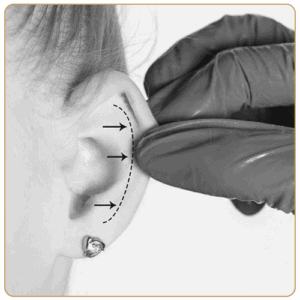
Ear cartilage is sometimes used when more cartilage is needed or when the septal cartilage is limited. It is taken from behind the ear, where the incision is usually well hidden.
Ear cartilage is softer and more curved than septal cartilage, which can make it useful in selected areas of the nose. It can be particularly helpful in revision cases or where gentle contouring is required.
Patients often worry that taking cartilage from the ear will change the ear’s appearance. When planned and performed carefully, this is usually avoided.
Rib cartilage
Rib cartilage may be considered when a larger amount of strong cartilage is required. This is more common in major revision rhinoplasty, reconstructive cases or noses that need substantial structural support.
Rib cartilage provides strength and volume, which makes it valuable in more complex procedures. The trade off is that it involves a separate donor site and a small scar on the chest.
For the right patient, rib cartilage can be an excellent option when other sources are not enough.
Can donor cartilage be used?
In some rhinoplasty cases, donor cartilage may be considered as an alternative to taking cartilage from the patients own rib. This can be helpful when additional structural support is needed, particularly in selected revision or more complex cases. The advantage is that it avoids a separate chest incision and may reduce the extent of surgery. As with any graft material, it carries potential risks such as infection, warping, resorption or the need for further treatment, although published studies generally report this as uncommon. The most suitable option depends on the patients own anatomy, surgical history and treatment goals, and this is discussed during consultation.
How does a surgeon chose which cartilage to use?
The best source of cartilage depends on the individual patient and the goals of surgery.
When deciding which cartilage to use, I consider how much support is needed, whether the patient has had previous nasal surgery, the quality of the existing nasal structure and whether both cosmetic and functional correction are required.
In a straightforward primary rhinoplasty, septal cartilage is often enough. In revision rhinoplasty, more cartilage may be needed, and ear or rib cartilage may be more appropriate. The decision is always based om achieving a stable and natural result rather than using a one size fits all approach.
Common uses for cartilage grafts in rhinoplasty
Cartilage grafts can be used in several parts of the nose depending on the problem being treated.
One common use is support of the nasal tip. Some patients have weak or poorly defined tip cartilage, and a graft can help improve shape and stability,
Grafts can also be used along the middle part of the nose to improve the internal airway and support the bridge. In other cases, they help correct contour irregularities, restore shape after previous surgery or strengthen areas at risk of collapse.
In revision rhinoplasty, grafts are often essential because previous surgery may have removed too much cartilage or left the nose structurally weak.
Will cartilage grafts make the nose look bigger?
Not necessarily. This is a common concern, but cartilage grafts are not used simply to add bulk. They are used to improve shape and support.
In many cases, a well placed graft actually helps the nose look more refined because it creates cleaner definition and better balance. A nose that is structurally weak can sometimes look less attractive over time, even if it was made smaller during surgery. Support is often what allows the final result to look elegant and natural.
What is recovery like when cartilage grafts are used?
Recovery after rhinoplasty with cartilage grafts is often similar to recovery after other types of rhinoplasty, although this depends on the extent of surgery and the source of the cartilage.
Most patients can expect swelling, congestion and bruising in the early stage of recovery. The nose usually looks swollen at first, especially around the tip. If cartilage is taken from the ear or rib, there will also be healing at that donor site.
Early swelling improves over the first few weeks, but the nose continues to settle over many months. This is particularly true in patients having structural or revision rhinoplasty.
Recovery varies from person to person, and I always advise patients clearly on what is realistic in their specific case.
Are there risks or limitations?
As with any rhinoplasty procedure, cartilage grafting has potential risks and limitations. There may include swelling, asymmetry, scar tissue, contour irregularities, infection and the possibility that further refinement may be needed in the future.
When cartilage is taken from another area such as the ear or rib, there can also be temporary discomfort at the site. In more complex cases, some grafts may require very careful reshaping to reduce the chance of visibility or irregularity.
The key point is that cartilage grafts are used to improve the structural quality of rhinoplasty, but they still need careful planning, surgical precision and realistic expectations.
Are cartilage grafts always necessary in rhinoplasty?
No. Many rhinoplasty procedures can be performed without major grafting, especially when the patient has strong natural cartilage and only minor reshaping is needed.
However, in patients who need more support, better airflow, correction of previous surgery or stronger tip definition, grafts can make a significant difference to both appearance and function.
The best way to know whether cartilage grafts are needed is through a detailed consultation and examination.
Who may be a good candidate for rhinoplasty with cartilage grafts?
You may be a good candidate if you are concerned about shape, support or function of your nose and you would like a result that looks balanced and natural.
Cartilage grafts are often considered in patients who:
- have weak nasal structure
- want better tip support or definition
- are undergoing revision rhinoplasty
- have breathing issues related to internal collapse
- need reconstructive support after injury of previous surgery
Suitability can only be confirmed after a proper assessment as every nose is different.
Consultation for cartilage graft rhinoplasty in London
A successful rhinoplasty is not just about reducing the nose. It is about preserving or restoring structure so the result looks natural and functions well over time.
During consultation, I assess the external shape of the nose, the strength of the underling cartilage and whether grafting is likely to improve the final result. I also explain where cartilage may come from, what recovery is likely to involve and what can realistically be achieved.
If you are considering rhinoplasty or revision rhinoplasty and would like expert advice, you can arrange a consultation with Dr Amir Sadri in London.
Frequently Asked Questions
Will my ear look different if cartilage is taken for rhinoplasty?
The incision is usually placed behind the ear, where it is concealed. In carefully planned cases, the ear shape is usually preserved.
Is rib cartilage only used in revision rhinoplasty?
Not always, but it is more commonly used in revision or reconstructive cases where a larger amount of cartilage is needed.
Can cartilage grafts help breathing as well as appearance?
Yes. In some patients, grafts are used to support the internal nasal structure and improve airflow as well as shape.
Do cartilage grafts move or warp?
Cartilage must be chosen and shapes carefully. In experienced hands, grafts are used to create stable support, but every surgical procedure carries some risks and individual healing varies.
Will I need a graft in my rhinoplasty?
Not every patient does. This depends on your anatomy, your goals and whether support or reconstruction is needed.
Is recovery longer when a graft is used?
It can be slightly more involved, especially if cartilage is taken from the ear or rib, but this depends on the complexity of the surgery.